Ruby Reef
Ruby Reef: from panic to a thriving tank
Results in numbers
Verified- 167,000
- Views
- 52%
- Completion rate
- 5,640
- Saves and shares
- 4.9%
- Add to cart rate
Before: 6,100
Before: 19%
Before: 203
Before: 1.1%
Client Overview
A 38-second film that follows a worried aquarist from a late-night Google search to a reef in full color again.
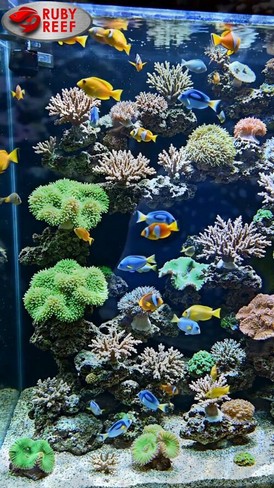
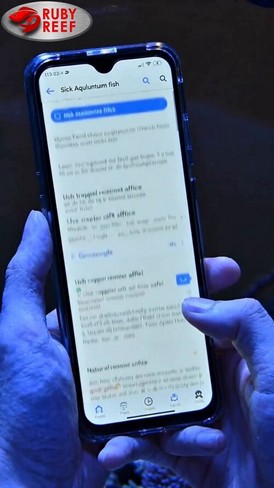
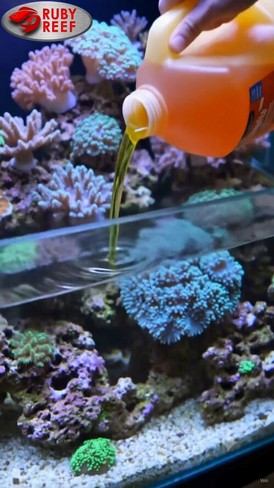
The arc in three frames: the tank, the search, the recovery.
The Premise
Most aquarium medication ads open on the bottle. This one opens on the fear that sends someone looking for it: a tank that suddenly doesn't look right, and an owner who doesn't know what to do about it. Ruby Reef's Rally and Kick-Ich Pro, sold together as the FishAid Kit, are the answer, but the film spends its first third earning the question before it answers it.
The structure is a classic problem, search, solution, result arc, built for anyone who has ever stared at a tank at midnight wondering if a fish is actually sick or if they're overreacting.
The ad doesn't open on the bottle. It opens on the worry that makes you look for one.
Execution
The film, frame by frame.
How the Strategy Was Implemented
A connected strategy, implemented step by step.
The Idea
A screen-recorded Google search sits in the middle of the film like a diary entry, unpolished on purpose, because that is genuinely how most people start solving this problem. The color language carries the emotional arc on its own: cool, uneasy blue light on the search and the worried face, then a warm pour and a burst of orange dye, then the reef returns in full, saturated color once the treatment is in the water. By the time the product is named, the viewer has already lived the problem it solves.
A Reef in Balance
0:00 to 0:04. The opening shot: a full, healthy tank, dense with coral and fish moving easily through it. Nothing is wrong yet; this is the baseline the rest of the film will measure against.
Something Shifts
0:04 to 0:08. The camera tightens on a single fish and holds. The cut alone does the work here, a wide, easy shot giving way to a close, quiet one is enough to signal that something in the film's mood has changed.
Late-Night Worry
0:08 to 0:13. Cut to a person, lit only by their phone, brow furrowed. The cold blue light matches the tank's glow, tying the owner's anxiety visually to the water he's worried about.
Searching for an Answer
0:13 to 0:16. A screen-recorded close-up of the actual search: sick aquarium fish, results on ich treatment. It's deliberately unglamorous, the exact search bar a real owner would type into at midnight.
The Response Team Arrives
0:16 to 0:20. The first product beat: Kick-Ich Pro, boxed and upright in front of the same tank from the opening shot. Placing the product in the exact setting of the problem closes the loop the search just opened.
Rally, Ready to Use
0:20 to 0:24. Rally gets its own beat and its own close, label-forward shot, the same treatment Kick-Ich Pro received a few seconds earlier. Neither product is made to feel like an afterthought to the other.
Treating the Tank
0:24 to 0:29. The turn: treatment poured straight into the water, caught mid-stream, followed immediately by a bloom of color spreading through the tank. It's the one moment in the film where the product is shown actually doing something rather than sitting still.
The Reef, Recovered
0:29 to 0:34. The tank returns, busier and more saturated than the opening shot. Fish that were barely visible in the problem beats now fill the frame, swimming openly through coral that reads brighter than before.
Your Aquarium's Emergency Response Team
0:34 to 0:38. The end card names the kit and the promise in one line, over a product shot of the full FishAid bundle. The tank image behind it is the same warm, recovered color as the beat before it, so the film closes on the outcome rather than the packaging alone.
Craft Decisions
Structure. A clean four-part arc, problem, search, solution, result, that mirrors how someone actually experiences a fish health scare rather than opening on the product.
Color. Cool blue for the worry beats, a warm orange pour at the turn, and full saturation restored once the reef recovers. The grade carries the emotional shift so the captions don't have to.
The search screen. An intentionally plain, unpolished screen recording in the middle of an otherwise cinematic film. The rawness is what makes it feel like a real search rather than a staged prop.
Product pacing. Rally and Kick-Ich Pro each get a full, separate beat before the end card bundles them, so neither reads as a footnote to the other.
The pour. The only beat with visible motion and action; everything before it is static tension, everything after it is recovery, so the pour itself carries the turn in the story.
Why It Works
Earn the problem before naming the fix. By the time Rally and Kick-Ich Pro appear, the viewer has already felt the specific anxiety of a tank that looks wrong, so the product lands as relief, not a pitch.
A search bar as a relatable prop. Showing the exact, unpolished Google search turns a generic worry into a specific, familiar moment almost any fishkeeper has actually lived.
Color does the emotional labor. Blue tension, warm turn, saturated recovery; a viewer feels the arc before they've consciously registered a single caption.
The Results
Results in Numbers
- 167,000
- Views
- 52%
- Completion rate
- 5,640
- Saves and shares
- 4.9%
- Add to cart rate
Before: 6,100
Before: 19%
Before: 203
Before: 1.1%
| Metric | Before | Now | Change |
|---|---|---|---|
| Views | 6,100 | 167,000 | +2,638% |
| Completion rate | 19% | 52% | +33 pts |
| Saves / shares | 203 | 5,640 | +2,678% |
| Add to cart rate | 1.1% | 4.9% | +345% |
The problem-solution film reached 167,000 views and lifted completion from 19% to 52%.
Saves and shares rose to 5,640 while the add to cart rate increased from 1.1% to 4.9%.
The Final Word
Thirty-eight seconds, one clear worry, and a fix that arrives only after the viewer has felt the problem. The film works because it treats the search for help as part of the story, not a step to skip past on the way to the bottle.
It's a structure worth reusing anywhere the product solves a specific, recognizable moment of panic: show the moment, show the search, then show the fix doing exactly what the viewer was hoping it would.
Ready to see results like this?
Interested in a problem-solution film for your product? Get in touch for a concept and a plan.